Why human geography belongs at the heart of city planning
Part 1 of a series
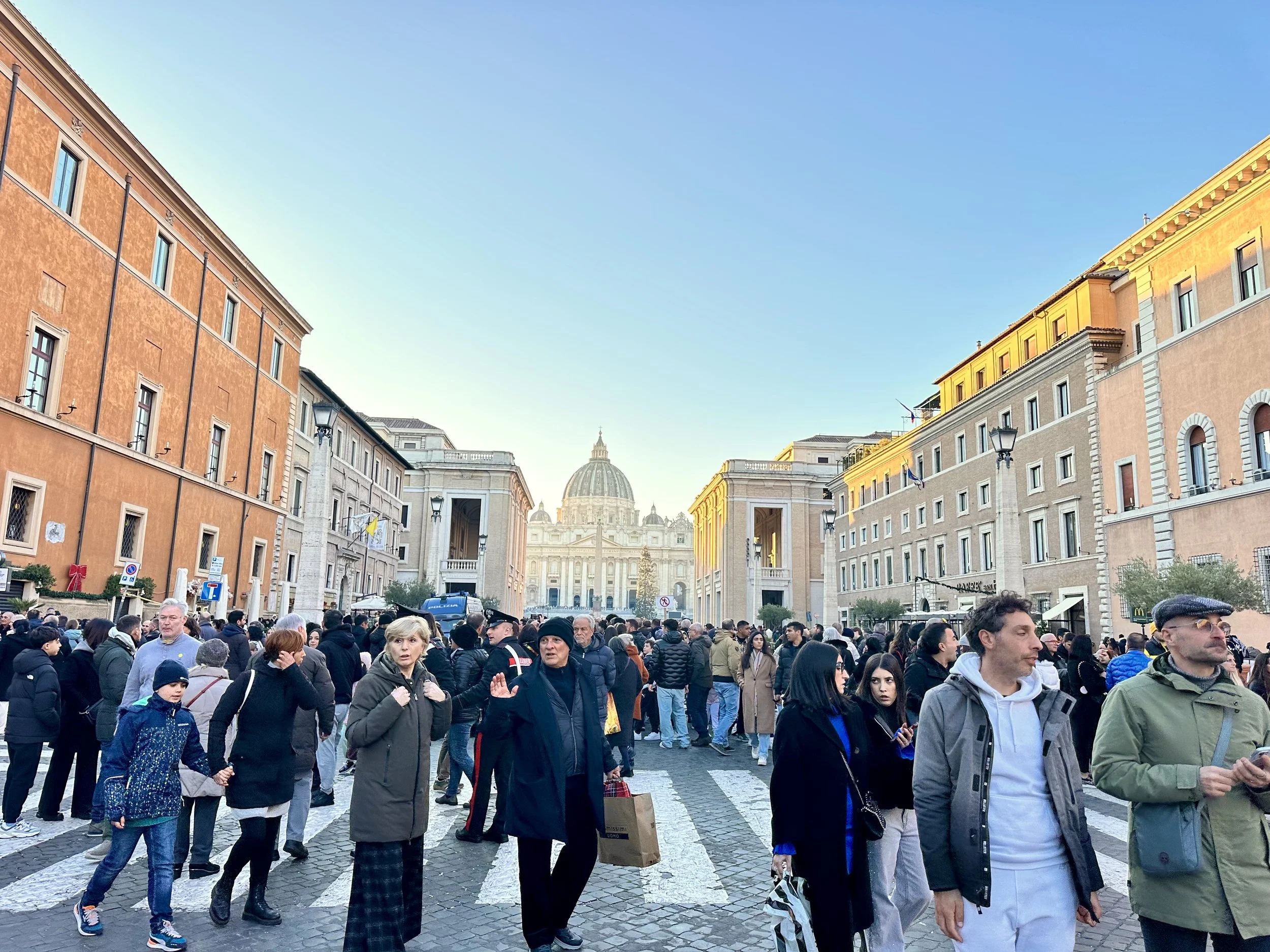
Busy street filled with people leading into St Peters’s Basilica. Image credit: Liesl Codrington
Human geography is having a moment. Not centre stage - it's never quite been that - but it's showing up more in the right conversations. I was at a work breakfast recently where one of the panellists introduced themselves as a human geographer. Small thing. But it made me want to stand up and cheer.
Because for a long time, this discipline has been sitting at the margins of planning and policy discussions that it should have been shaping.
The dominant conversations about cities have been about infrastructure, economics and design. All essential. But none of them fully explain how places are actually lived, or how change is experienced by the people inside it. That's the gap human geography fills. And as the problems cities are facing grow more complex, that gap is becoming harder to ignore.
Cities are not just physical or economic systems. They are social systems. And human geography is the discipline built to understand them.
At its core, it is concerned with the relationship between people, place and power. How populations shift, how patterns emerge, and how those patterns shape opportunity, belonging and everyday life. That perspective is becoming critical again, particularly across three areas.
Understanding systems and populations
This is the part of the work I find genuinely so interesting.
Human geography is fundamentally about understanding how systems and populations interact over time. It examines how demographic change, migration, economic conditions and social behaviour shape places. Not as static data points, but as patterns that evolve, interact and compound in ways that are often invisible until you know how to read them.
What I love about this is the movement between scales. You start with the big picture. Broad demographic shifts, migration flows, and economic restructuring. And then you trace that all the way down to what it means for a specific street, neighbourhood or community. That translation is where the real insight lives. It's also where planning decisions either get it right or miss the point entirely.
Without that connection, you end up with strategies that look coherent at a systems level but land badly on the ground. Or local interventions that don't account for the broader dynamics driving change. Both failures have real costs for real people.
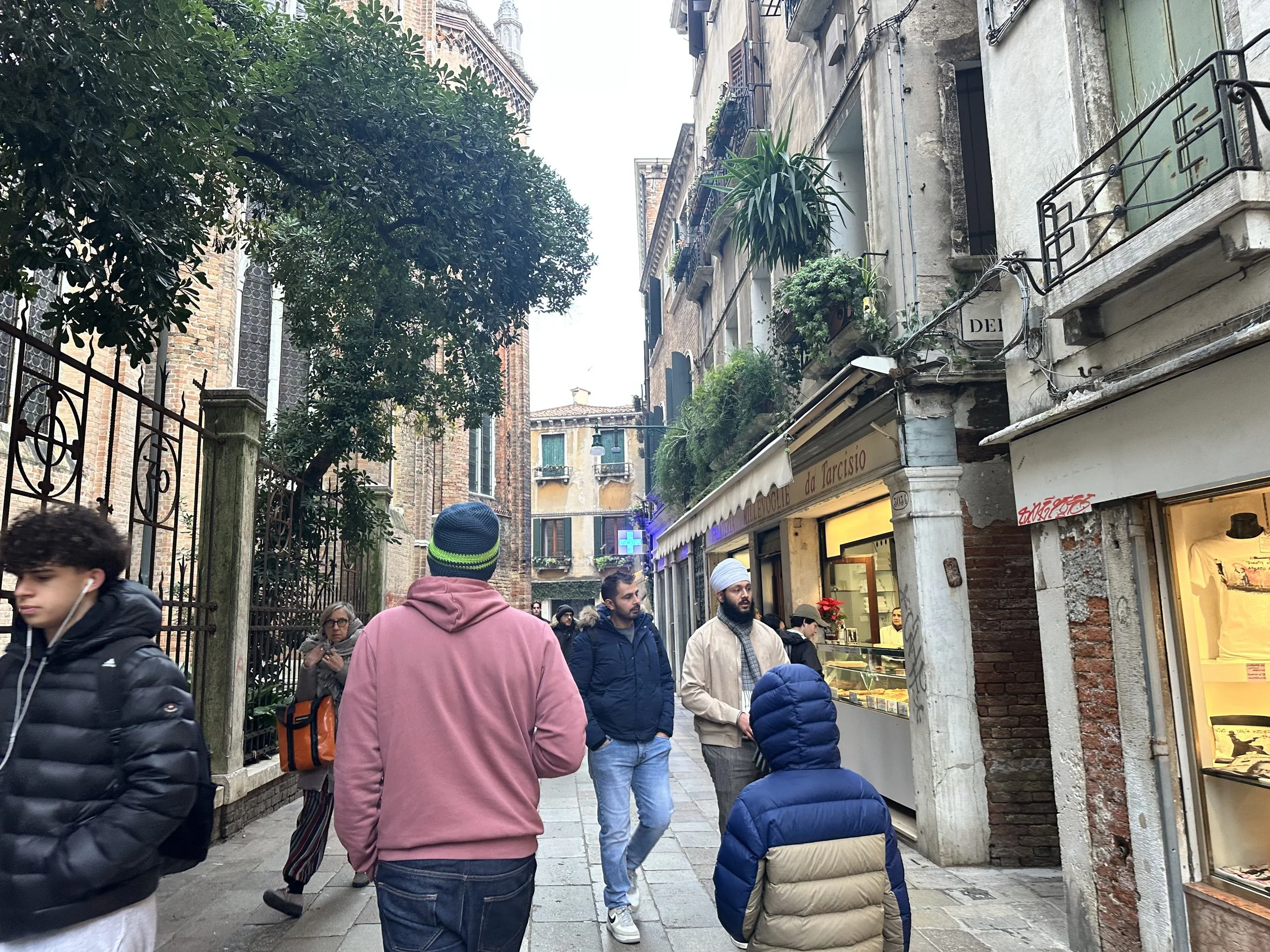
Laneway in Venice. Image credit: Liesl Codrington
Climate change, resilience and spatial inequality
The stakes become even clearer in the context of climate change.
Climate impacts are not evenly distributed. They are shaped by geography - by where people live, what infrastructure they have access to, and their capacity to respond. Heat exposure, flood risk, access to green space, the ability to adapt and recover. All of it varies sharply across cities and regions, and much of that variation tracks existing patterns of inequality.
These are not just environmental issues. They are social and spatial ones.
Human geography brings a lens of spatial justice to these questions. Who is most exposed? Who has the least capacity to respond? How are planning and investment decisions either reinforcing or reducing those gaps? Resilience, understood properly, is not just about infrastructure. It is about people, communities and systems, and how they adapt over time under pressure.
This is one of the areas I'll be exploring in more depth in this series, because the intersection of climate planning and spatial inequality is somewhere the discipline has a lot to contribute and hasn't always been given the room to do it.
Urban planning, social insight and decision-making
This is where human geography connects most directly to urban planning practice.
Planning decisions are routinely framed as technical. Land use, density, transport, and infrastructure provision. But their impacts are deeply social. They determine who has access to housing, services and opportunity. They shape how people move through cities, how communities form, and whether people feel they belong.
As I’ve long said -
“It’s all about the people”.
What I've seen, time and again, is that decisions that look neutral rarely are. The framing matters. The data that gets centred matters. Who gets consulted, and how, matters. Human geography provides a way of understanding those dynamics before decisions get locked in, not after.
It allows planners to read emerging patterns in demographics, behaviour and community experience, and translate those into grounded decisions that connect strategic intent with lived reality.
In cities navigating climate transition, housing pressure, shifting work patterns and growing inequality, that capability is not supplementary. It is central.
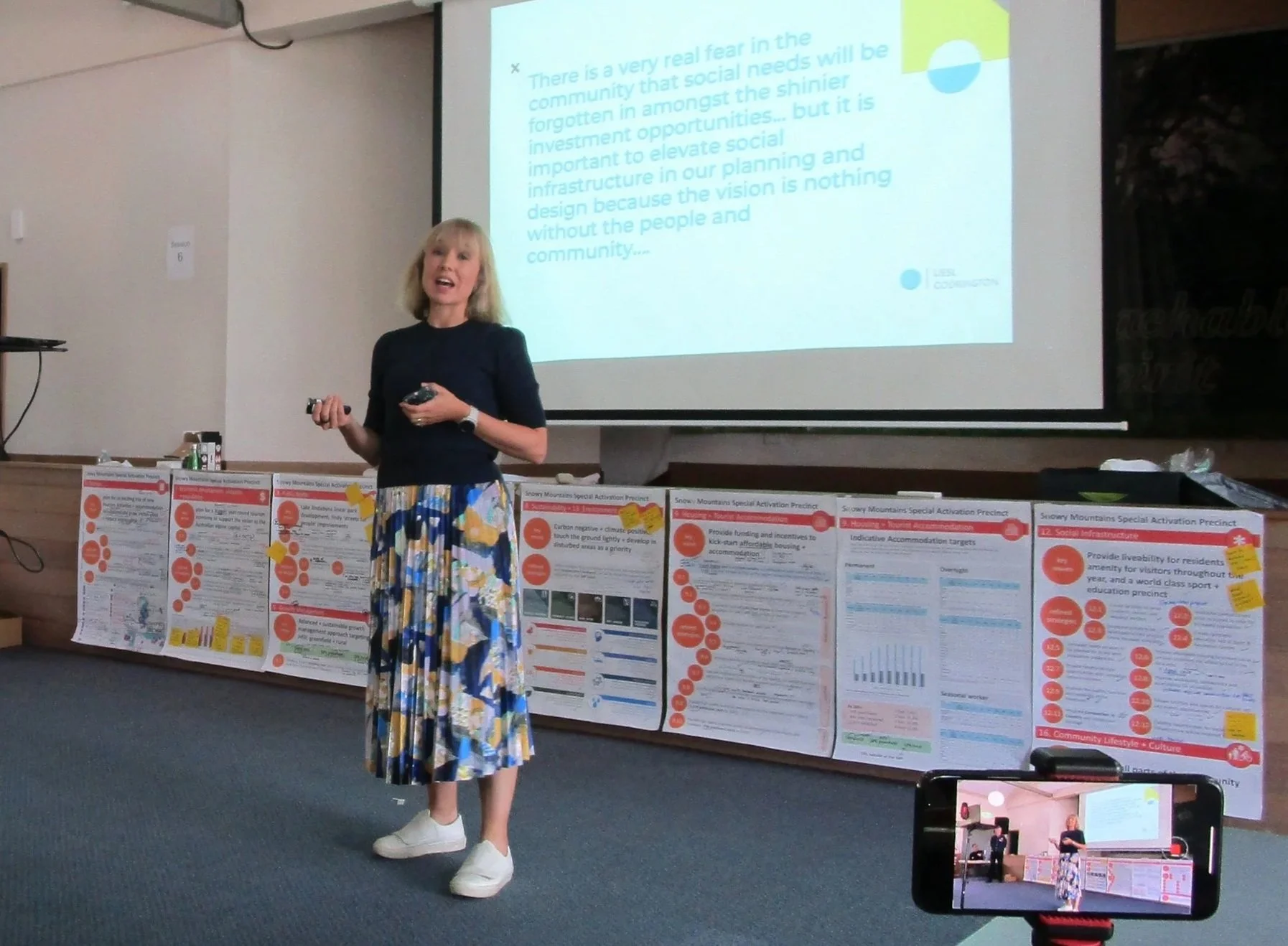
Liesl Codrington speaking on social needs and social infrastructure for master planning in the Snowy Mountains. Image credit: Jensen Plus
Human geography is not a niche perspective. It is a framework for understanding how cities actually function.
Cities that succeed in the coming decades will not simply be well designed or well connected. They will be cities that understand their populations, their places and the patterns that shape them. That requires disciplines and practitioners who can move between the systemic and the local, who can read social dynamics as clearly as infrastructure plans, and who can connect the big picture to the everyday.
That is what human geographers do.
As cities grow more complex, that is not just useful. It is essential.
More to come….
This post sets the frame of some things I’ve been thinking through. Over the next few pieces I'll be going deeper on three areas where I think human geography has the most to contribute right now.
Climate resilience and planning. How spatial inequality shapes who bears the burden of climate risk, and what genuinely resilient planning actually requires.
Housing and belonging. Beyond supply and affordability - how housing decisions shape community, identity and who feels they have a place in a city.
Population shifts in Australia. What the demographic patterns unfolding across Australian cities and regions actually mean for planning, policy and place.
If any of those resonate with the work you're doing, I'd love to hear from you.